

Hybrid Devices Market Hit $151.88 Billion by 2030 as Demand for Flexible Computing Solutions Accelerates Worldwide
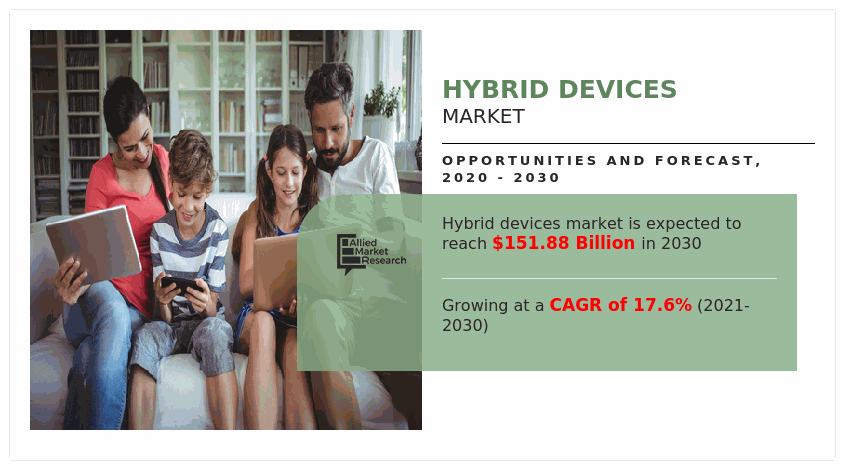
Hybrid Devices Market witnessing strong growth due to rising enterprise mobility, remote work adoption, and increasing demand for versatile computing solutions
Growing preference for detachable laptops, digital transformation initiatives, and hybrid work environments are driving expansion of the global Hybrid Devices Market.”
WILMINGTON, DE, UNITED STATES, June 22, 2026 /EINPresswire.com/ -- — Allied Market Research
According to Allied Market Research, the Hybrid Devices Market size was valued at $30.06 billion in 2020 and is projected to reach $151.88 billion by 2030, expanding at a CAGR of 17.6% from 2021 to 2030. The impressive growth trajectory reflects increasing consumer demand for flexible, efficient, and mobile computing platforms capable of supporting modern digital lifestyles and enterprise requirements.
The Hybrid Devices Market is emerging as one of the fastest-growing segments within the global computing and consumer electronics industry. Businesses, educational institutions, government agencies, and individual consumers are increasingly seeking devices that combine the portability of tablets with the productivity capabilities of traditional laptops. This growing demand for multifunctional computing solutions is reshaping the technology landscape and encouraging manufacturers to introduce innovative hybrid device designs.
Download PDF Brochure: https://www.alliedmarketresearch.com/request-sample/1506
Hybrid devices have evolved significantly over the last decade. Originally considered niche products, these devices now serve as mainstream computing tools across multiple industries. Their ability to seamlessly switch between laptop and tablet modes makes them particularly attractive in an era characterized by remote work, digital learning, mobile productivity, and cloud-based collaboration.
As organizations continue investing in workforce mobility and digital transformation initiatives, hybrid devices are becoming an essential component of modern IT infrastructure. The integration of advanced processors, touch-screen displays, cloud connectivity, artificial intelligence capabilities, and extended battery performance is expected to further strengthen market growth during the coming years.
Hybrid Devices Market Overview
The Hybrid Devices Market encompasses computing devices designed to combine the functionalities of laptops and tablets into a single product. These devices typically feature detachable keyboards, convertible hinges, touch-enabled displays, stylus compatibility, and lightweight form factors.
The increasing popularity of hybrid devices stems from their versatility. Users can utilize these products as traditional laptops for productivity tasks such as document creation, software development, presentations, and data analysis. Simultaneously, they can function as tablets for media consumption, digital note-taking, entertainment, and mobile collaboration.
Manufacturers are continually enhancing product capabilities through innovations in display technology, battery optimization, wireless connectivity, and processing power. These advancements have positioned hybrid devices as attractive alternatives to both conventional laptops and standalone tablets.
The Hybrid Devices Market is benefiting from growing investments in mobile computing infrastructure, widespread cloud adoption, and increasing demand for flexible work solutions. Organizations across industries are deploying hybrid devices to improve workforce productivity while reducing hardware management complexity.
Furthermore, advancements in operating systems and application ecosystems have improved compatibility between desktop and mobile experiences, making hybrid devices increasingly practical for professional and personal use.
Market Dynamics
The Hybrid Devices Market is shaped by multiple technological, economic, and consumer-driven factors. Rapid digitalization, changing work environments, and evolving user preferences are among the primary forces influencing market expansion.
One of the strongest market drivers is the shift toward flexible work models. Businesses increasingly support hybrid work arrangements that require employees to transition seamlessly between office, home, and remote environments. Hybrid devices offer the mobility and versatility necessary to support these work patterns.
Educational institutions are also contributing significantly to demand. Schools, universities, and training organizations are adopting hybrid devices to support digital learning initiatives and collaborative educational environments.
At the same time, the consumer segment is embracing hybrid computing solutions for entertainment, productivity, gaming, and communication purposes. The ability to perform multiple functions using a single device enhances convenience and reduces overall technology expenditures.
Despite favorable growth conditions, challenges remain. Hybrid devices generally carry higher price points than standard tablets or entry-level laptops. In addition, some consumers perceive certain hybrid models as heavier or less optimized for specific tasks compared to dedicated devices.
Nevertheless, ongoing innovation and economies of scale are expected to improve affordability and performance, supporting broader market adoption in the coming years.
Market Drivers
Several important factors are accelerating the growth of the Hybrid Devices Market globally.
The expansion of enterprise mobility programs is among the most influential drivers. Organizations are equipping employees with portable computing solutions that enable access to business applications, collaboration tools, and cloud services from virtually any location.
Another key growth driver is the increasing demand for productivity-focused consumer electronics. Users seek devices capable of handling work-related tasks while simultaneously supporting entertainment and communication functions.
Technological advancements have also enhanced the appeal of hybrid devices. Modern products offer high-resolution displays, powerful processors, advanced security features, fast wireless connectivity, and extended battery life.
The proliferation of cloud computing further strengthens market demand. Cloud-based productivity suites allow users to access files and applications across multiple devices, making hybrid devices ideal tools for modern digital workflows.
Moreover, increasing investments in digital education infrastructure have created substantial opportunities for device manufacturers. Educational institutions require versatile devices capable of supporting both classroom and remote learning environments.
Market Restraints
Although growth prospects remain strong, several factors could limit the expansion of the Hybrid Devices Market.
Pricing remains a significant challenge. Premium hybrid devices often cost more than traditional laptops or tablets, making adoption difficult for price-sensitive consumers and organizations with limited technology budgets.
Device weight and ergonomics can also present concerns. Some hybrid models may be heavier than tablets while offering less processing power than high-performance laptops, creating trade-offs for certain users.
Compatibility issues with specialized software applications occasionally limit adoption among professionals who require advanced computing capabilities.
Additionally, rapid technological evolution creates shorter product replacement cycles, which may discourage some consumers from making significant investments in hybrid computing platforms.
Market Opportunities
The future of the Hybrid Devices Market presents numerous growth opportunities across consumer and enterprise sectors.
Artificial intelligence integration represents a significant area of opportunity. AI-powered features such as predictive performance optimization, intelligent battery management, voice assistants, and personalized user experiences are enhancing device functionality.
The expansion of 5G networks is expected to further accelerate adoption. High-speed wireless connectivity enables hybrid devices to support cloud-based applications, real-time collaboration, and immersive digital experiences with minimal latency.
Emerging markets across Asia-Pacific, Latin America, and Africa offer considerable growth potential due to rising internet penetration, increasing digital literacy, and growing investments in technology infrastructure.
Manufacturers are also exploring opportunities in specialized sectors including healthcare, education, logistics, field services, and government operations, where mobility and productivity are critical requirements.
Technology Analysis: Evolution of Hybrid Devices
Technological innovation remains central to the evolution of hybrid devices.
Modern hybrid devices incorporate advanced touch-screen displays, stylus functionality, biometric authentication systems, AI-powered productivity tools, and cloud-native operating environments. These capabilities enhance usability while supporting increasingly complex workloads.
Display technology has improved dramatically, with manufacturers introducing OLED panels, high refresh rates, and ultra-high-definition resolutions. These advancements enhance both professional and entertainment experiences.
Processor development is another important area of innovation. Energy-efficient chip architectures enable manufacturers to deliver improved performance while extending battery life.
Cloud synchronization capabilities allow users to seamlessly transition between devices and access files, applications, and collaboration tools from virtually any location.
As technology continues advancing, hybrid devices are expected to become increasingly powerful, lightweight, and versatile.
Procure This Report (310 Pages PDF with Insights, Charts, Tables, and Figures): https://www.alliedmarketresearch.com/hybrid-devices-market/purchase-options
Hybrid Devices Market Size and Future Expansion
The Hybrid Devices Market Size is projected to increase significantly over the forecast period as demand for versatile computing solutions continues rising.
Businesses increasingly view hybrid devices as strategic investments that support workforce flexibility, productivity, and operational efficiency. Consumers are similarly attracted to the convenience of owning a single device capable of performing multiple functions.
The growing convergence of work, education, entertainment, and communication activities within a single device category is expected to support sustained market expansion.
Advancements in hardware performance, software optimization, and connectivity technologies will further strengthen adoption across both developed and emerging markets.
Hybrid Devices: Redefining Modern Computing
Hybrid devices have transformed the traditional computing landscape by eliminating the distinction between laptops and tablets.
These devices enable users to switch effortlessly between productivity-focused and entertainment-oriented use cases. Professionals can create reports, conduct presentations, and collaborate remotely while consumers can stream media, browse the internet, and engage with digital content.
The flexibility offered by hybrid devices aligns closely with modern user expectations, making them increasingly attractive across demographic groups.
Businesses particularly value hybrid devices because they reduce the need to provide employees with multiple computing platforms, simplifying device management and lowering operational costs.
Hybrid Device Innovation and Product Development
The hybrid device segment continues to experience rapid innovation as manufacturers compete to deliver superior user experiences.
Companies are introducing detachable keyboards, rotating hinges, integrated stylus support, improved cooling systems, and lightweight materials to enhance portability and productivity.
Recent product launches demonstrate the industry’s focus on balancing performance, mobility, and usability. Advanced design features enable users to adapt devices to different working environments and application requirements.
As competition intensifies, manufacturers are expected to continue investing heavily in research and development initiatives aimed at improving functionality and differentiation.
Hybrid Cell Market and Emerging Technology Convergence
The hybrid cell market is increasingly intersecting with the broader hybrid computing ecosystem through advancements in battery technology and power management systems.
Next-generation battery solutions provide longer operating times, faster charging capabilities, and improved energy efficiency. These innovations directly support the growing demand for highly portable computing devices.
Energy-efficient hardware architectures and intelligent power optimization technologies further enhance user experiences by extending device usability throughout the workday.
The convergence of advanced battery technologies and hybrid computing platforms is expected to play a critical role in future market development.
Segment Analysis
Detachable Hybrid Devices Segment
Detachable hybrid devices currently represent the largest segment within the Hybrid Devices Market.
These products offer exceptional flexibility by allowing users to separate the keyboard from the display unit and operate the device as a standalone tablet when necessary. This versatility makes detachable models particularly attractive to business professionals, students, and creative users.
Manufacturers continue introducing innovative designs featuring adjustable stands, detachable hinges, integrated projectors, and advanced touch interfaces. Such innovations are strengthening the competitive position of detachable devices within the broader computing market.
End-User Analysis
The IT and telecommunications sector remains the largest adopter of hybrid devices due to increasing mobility requirements and digital workplace initiatives.
Organizations within this sector require devices capable of supporting remote access, collaboration platforms, cloud applications, and secure communication systems.
Meanwhile, personal users are expected to represent the fastest-growing segment. Consumers increasingly seek devices that combine laptop productivity with tablet convenience for education, entertainment, communication, and everyday computing tasks.
Regional Analysis
North America continues to maintain a strong presence in the Hybrid Devices Market due to high technology adoption rates, advanced digital infrastructure, and substantial enterprise spending on mobility solutions.
Europe remains an important market driven by digital transformation initiatives, remote work adoption, and educational technology investments.
Asia-Pacific is expected to witness the fastest growth during the forecast period. Rapid urbanization, expanding internet access, rising disposable incomes, and increasing investments in digital infrastructure are creating favorable market conditions across the region.
Countries such as China, India, Japan, South Korea, and Southeast Asian nations are emerging as key growth centers for hybrid computing technologies.
Competitive Landscape
The Hybrid Devices Market features intense competition among global technology leaders focused on innovation, product differentiation, and ecosystem integration.
Major companies continue investing in advanced hardware designs, AI-enabled capabilities, cloud integration, and productivity-focused features to strengthen market positions.
Key market participants include ASUSTeK Computer Inc., Lenovo, HP Development Company, L.P., Microsoft, Dell Inc., Toshiba Corporation, Samsung Corporation, Acer Inc., Fujitsu Ltd., and LG Corporation.
Strategic partnerships, new product launches, acquisitions, and research initiatives remain central to competitive strategies across the industry.
Investment Analysis and Regulatory Landscape
Investment activity within the Hybrid Devices Market remains robust as manufacturers seek to capitalize on growing demand for flexible computing solutions.
Technology companies are increasing expenditures on research and development, semiconductor innovation, display technologies, and AI-enabled computing platforms. Venture capital investments in productivity software and device ecosystems are also supporting market expansion.
Regulatory considerations focus primarily on data security, environmental sustainability, electronic waste management, and product safety standards. Compliance with these regulations is becoming increasingly important for manufacturers operating in global markets.
Industry Trends and Key Market Insights
Several important trends are shaping the future direction of the Hybrid Devices Market.
Artificial intelligence integration is enhancing productivity and user experiences through intelligent automation and personalized functionality.
Cloud computing adoption continues supporting device flexibility and remote accessibility.
The rise of hybrid work environments is creating sustained demand for versatile computing platforms.
Educational technology investments are expanding adoption among students and institutions worldwide.
Advancements in battery performance, wireless connectivity, and lightweight materials are improving overall device capabilities and market appeal.
Future Outlook
The future outlook for the Hybrid Devices Market remains highly positive. Continued digital transformation, increasing enterprise mobility requirements, expanding cloud ecosystems, and evolving consumer preferences will drive long-term growth.
The convergence of artificial intelligence, 5G connectivity, cloud computing, and advanced hardware technologies is expected to create a new generation of hybrid devices capable of supporting increasingly sophisticated workloads.
As organizations and consumers seek flexible, efficient, and portable computing solutions, demand for hybrid devices is expected to remain strong across global markets.
Get a Customized Research Report: https://www.alliedmarketresearch.com/request-for-customization/1506
Conclusion
The Hybrid Devices Market is undergoing significant expansion as businesses and consumers increasingly embrace flexible computing solutions that combine productivity, mobility, and convenience. Driven by enterprise mobility initiatives, digital transformation programs, remote work adoption, and advancements in computing technology, the market is projected to witness substantial growth through 2030. Innovations in detachable designs, artificial intelligence integration, battery efficiency, and cloud connectivity are transforming hybrid devices into essential tools for modern digital lifestyles. As technology continues to evolve and demand for versatile computing platforms rises, the Hybrid Devices Market is expected to create significant opportunities for manufacturers, investors, enterprises, and consumers worldwide.
Trending Reports in ICT and Media Industry:
real-time location system market
https://www.alliedmarketresearch.com/real-time-location-systems-market
near field communication market
https://www.alliedmarketresearch.com/near-field-communication-market
managed security services market
https://www.alliedmarketresearch.com/managed-security-services-market
mainframe market
https://www.alliedmarketresearch.com/mainframe-market
hadoop-as-a-service market
https://www.alliedmarketresearch.com/hadoop-as-a-service-market
Graph Database Market
https://www.alliedmarketresearch.com/graph-database-market
fraud detection & prevention market
https://www.alliedmarketresearch.com/fraud-detection-and-prevention-market
About Us
Allied Market Research (AMR) is a full-service market research and business-consulting wing of Allied Analytics LLP based in Portland, Oregon. Allied Market Research provides global enterprises as well as medium and small businesses with unmatched quality of "Market Research Reports" and "Business Intelligence Solutions." AMR has a targeted view to provide business insights and consulting to assist its clients to make strategic business decisions and achieve sustainable growth in their respective market domain.
Pawan Kumar, the CEO of Allied Market Research, is leading the organization toward providing high-quality data and insights. We are in professional corporate relations with various companies and this helps us in digging out market data that helps us generate accurate research data tables and confirms utmost accuracy in our market forecasting. Each and every data presented in the reports published by us is extracted through primary interviews with top officials from leading companies of domain concerned. Our secondary data procurement methodology includes deep online and offline research and discussion with knowledgeable professionals and analysts in the industry.
David Correa
Allied Market Research
+ + + + + + + + + + + + + +1 800-792-5285
email us here
Visit us on social media:
LinkedIn
Facebook
YouTube
X
Legal Disclaimer:
EIN Presswire provides this news content "as is" without warranty of any kind. We do not accept any responsibility or liability for the accuracy, content, images, videos, licenses, completeness, legality, or reliability of the information contained in this article. If you have any complaints or copyright issues related to this article, kindly contact the author above.
